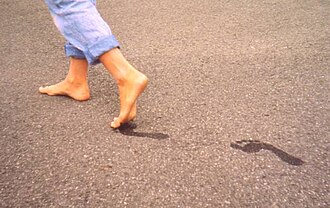
Does Walking Barefoot Have Health Benefits?
By Bluegrass101 Editorial Team | Updated June 11, 2026
Walking barefoot can feel refreshing, but feeling good in the moment is not the same thing as proving a universal health benefit.
I think barefoot walking is one of those topics where a small, sensible answer is more useful than a grand claim. Some people feel more grounded, mobile, or relaxed when they spend short periods barefoot on safe surfaces. Others are better off protecting their feet immediately.
- Can walking barefoot strengthen the feet or improve comfort?
- Which surfaces are safest for occasional barefoot walking?
- Who should be especially cautious about going barefoot?
- How can someone test the idea without turning it into a risky habit?
“The good physician treats the disease; the great physician treats the patient who has the disease.” — William Osler
Health advice around barefoot walking often swings between miracle claims and blanket warnings. More balanced resources from Cleveland Clinic, Harvard Health, and the American Podiatric Medical Association are more useful because they acknowledge both potential benefits and meaningful risks.
This guide explains where barefoot walking may help, where it clearly does not, and how to think about the topic without drifting into medical overstatement.
Terminology and Definitions
- Foot intrinsic muscles: small muscles inside the foot that help with stability and movement.
- Proprioception: the body’s sense of position and movement.
- Protective footwear: shoes chosen mainly to shield the foot from injury or stress.
- High-risk feet: feet affected by neuropathy, wounds, severe pain, or conditions that reduce sensation.
What People Usually Mean by “Benefits”
Most people are not actually talking about disease prevention when they praise barefoot walking. They are talking about comfort, mobility, awareness of the ground, and occasionally about rebuilding foot tolerance after living in very structured shoes. That is a narrower claim, and a more believable one.
Some short sessions on a clean, forgiving surface can encourage gentle foot motion and help a person notice how they load each step. That can be valuable, but it is still situational rather than universal.
Where Barefoot Walking May Help
On safe indoor flooring or clean grass, brief barefoot walking may help some people reconnect with balance, toe movement, and natural foot mechanics. Cleveland Clinic and Harvard Health both note that there can be a place for barefoot activity when it is approached thoughtfully.
I would frame the possible upside as awareness and gradual conditioning, not as a cure-all. The smallest improvements often come from paying attention rather than chasing extreme routines.
- May improve awareness of how the foot contacts the ground
- May encourage toe use and ankle mobility in some people
- May feel relaxing on safe, clean, forgiving surfaces
Who Should Be More Careful
Anyone with diabetes, reduced sensation, active foot wounds, severe plantar pain, or a history of injury should be much more cautious. This is not personal medical advice, but those are classic reasons to ask a clinician before experimenting. Loss of sensation changes the risk calculation immediately.
Outdoor environments also create obvious hazards: sharp objects, hot surfaces, infection risk, and unexpected terrain. Even enthusiastic barefoot advocates usually concede that surface matters.
A Sensible Way to Test the Idea
If someone without major foot-risk factors wants to try it, I would start indoors for a few minutes, then stop and see how the feet feel later that day and the next morning. No heroic distance, no pain tolerance contest, and no belief that more is always better.
That gradual approach is less dramatic than viral advice, but it is much more useful. The body often responds better to measured exposure than to sudden change.
| Question | Safer Answer |
|---|---|
| How long should I start? | A brief, comfortable session is enough. |
| What surface makes sense? | Clean, predictable, forgiving surfaces first. |
| What if I feel pain? | Stop and reassess rather than pushing through. |
The Bottom Line on Benefits
There may be context-specific benefits for some people, especially around awareness and gentle conditioning, but that is not the same as saying everyone should abandon supportive shoes. I find the most convincing health writing on this topic is cautious for a reason.
If your feet are healthy and you are curious, a careful experiment may be worthwhile. If your feet are vulnerable, protection wins.
Conclusion
Walking barefoot may help some people in some settings, but the benefits are conditional and the risks become much more important once sensation, injury history, or surface quality changes.
- Think in context, not absolutes.
- Safe surfaces and short sessions matter more than ideology.
- People with high-risk feet should be especially cautious.
For more current reading across entertainment, culture, practical guides, and technology, browse the Bluegrass101 blog index or jump to Popular Posts.